
A bright, floral Colombian coffee can taste like citrus and honey in one cup, then oddly sharp or hollow in the next. Often, the beans are not the problem. The difference is grind size. This coffee grind size guide will help you choose a starting point for your brewer, then make small, confident adjustments that let specialty-grade coffee taste as vivid and balanced as it was meant to.
Grinding is where whole beans become brewable coffee. It determines how quickly water moves through the grounds and how much flavor it can draw out along the way. Get it close, and the origin character in a carefully roasted coffee has room to shine. Get it far off, and even a beautiful, freshly roasted bean can taste sour, bitter, thin, or muddy.
Coffee grind size guide by brewing method
The descriptions below are useful visual references, but your own grinder matters more than any label. One grinder’s “medium-fine” may be another grinder’s “medium.” Start in the suggested range, taste the result, and adjust a little at a time.
Extra coarse: cold brew
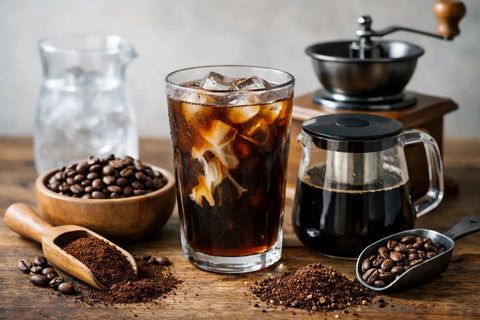
Extra-coarse grounds resemble coarse sea salt or peppercorn fragments. Use them for cold brew, particularly recipes steeped for 12 to 18 hours. This slower extraction benefits from larger particles, which help preserve a smooth, mellow profile and make filtering easier.
If cold brew tastes woody, weak, or unexpectedly sour, move slightly finer or extend the steep time. If it is heavy, bitter, or overly tannic, go coarser or shorten the steep. Cold water extracts differently from hot water, so do not expect a hot-brew grind setting to translate directly.
Coarse: French press and percolator
Coarse grounds look similar to kosher salt. They are a dependable starting point for French press, where coffee steeps in direct contact with water for about four minutes, and for many percolators.
A French press with too-fine grounds often produces a silty cup and can taste bitter because tiny particles continue extracting aggressively. A coarse grind will not eliminate every bit of sediment - metal filters naturally allow some oils and fines through - but it creates a cleaner, more satisfying body. If the cup tastes thin or tart, try a modest move finer before changing your ratio.
Medium-coarse: Flat-bottom drippers
Medium-coarse grounds fall between kosher salt and standard table salt. This range works well for brewers with thicker paper filters, including flat-bottom drippers, and can be a useful opening setting for larger flat-bottom drippers.
Thicker filters slow the drawdown and remove more coffee oils, producing clarity and a lighter texture. A medium-coarse grind helps keep that slower process from becoming too intense. With a delicate washed Peru or Guatemala coffee, this can reveal clean fruit, gentle sweetness, and nuanced florals.
Medium: drip coffee makers and batch brewers
Medium grounds resemble regular beach sand. They are the everyday starting point for automatic drip coffee makers and many batch brewers, where water spends a moderate amount of time passing through the coffee bed.
For a home drip machine, consistency is more valuable than chasing a perfect-looking particle. Use fresh whole beans when possible, measure your coffee and water, and notice how long the brewer takes to finish. A very fast brew may need a finer setting; a slow, bitter-tasting brew may benefit from a coarser one.
Medium-fine: Pour-over
Medium-fine grounds feel a little finer than table salt. They are often right for [pour-over brewers] (https://artisanjavatea.com/blogs/java-tea-connections/ultimate-pour-over-coffee-guide), where the narrow coffee bed and single exit hole can encourage a quicker drawdown.
This range is especially rewarding with specialty-grade single-origin coffees (https://artisanjavatea.com/collections/single-origin-coffee) because it gives you control without demanding espresso-level precision. If your pour-over finishes too quickly and tastes sour, grassy, or watery, grind slightly finer. If it drips slowly and tastes bitter, dry, or muted, go a touch coarser. Change only one small step at a time, then brew again using the same dose, water, and pouring pattern.
Fine: espresso and AeroPress recipes
Fine grounds look close to table salt, though espresso usually calls for a more precise setting than the visual comparison suggests. Espresso pushes water through a compact coffee puck under pressure in roughly 25 to 35 seconds. The grind must create enough resistance for water to extract sweetness, body, and aroma without stalling.
For espresso, taste and timing work together. If a shot runs very fast and tastes sharp, salty, or thin, grind finer. If it trickles out slowly and tastes intensely bitter or ashy, grind coarser. Small changes matter here, particularly with a fresh small-batch roast.
AeroPress can use fine, medium-fine, or even medium grounds depending on the recipe, steep time, and whether you press gently or quickly. It is one of the most flexible brewers, so begin with medium-fine and let the taste lead you.
Extra-fine: Turkish coffee
Turkish coffee requires an extra-fine, powder-like grind, finer than most standard grinders can produce evenly. The coffee is brewed with the grounds in the cup, creating its signature dense texture and rich presentation. Do not substitute an espresso grind and expect the same result.
How to read your cup and adjust the grind
Coffee has a useful way of telling you what it needs. Underextracted coffee often tastes sour, sharply acidic, salty, or disappointingly weak. The aroma may be pleasant, but the sweetness and finish disappear quickly. When everything else is consistent, grind a little finer to allow more extraction.
Overextracted coffee can taste bitter, astringent, hollow, or dry on the tongue. It may feel heavy without being sweet, and the distinct character of the origin can seem buried. Try a slightly coarser grind.
Do not confuse pleasant acidity with sourness. A well-brewed Kenyan, Colombian, or light-roasted Central American coffee may have a lively citrus or berry note that feels bright and refreshing. Sourness, by contrast, tends to feel unripe and abrupt, without balancing sweetness. Good specialty coffee should offer structure: fruit, sweetness, body, and finish in conversation with one another.
Your grinder matters as much as the setting
Blade grinders chop beans into uneven fragments, creating a mix of powdery fines and oversized chunks. That inconsistency makes extraction difficult to control: the fines can become bitter while larger pieces remain under extracted. A blade grinder can make coffee, but it limits repeatability.
A burr grinder crushes beans between two burrs into more uniform particles. It is the clearest equipment upgrade for anyone who enjoys brewing at home, whether the goal is a weekday drip pot or a carefully poured morning cup. Flat burrs and conical burrs can both make excellent coffee; the more practical question is whether the grinder offers enough range and adjustment precision for your favorite brewing method.
Keep the grinder clean, too. Coffee oils and retained grounds become stale over time, especially after dark roasts or flavored coffees. A quick routine of brushing out the chute and following the manufacturer’s cleaning guidance protects the flavors you paid for.
A simple way to dial in a new coffee
When you open a new bag, resist changing five things at once. Choose a reliable recipe for your brewer, weigh the coffee and water, and begin at the appropriate range in this coffee grind size guide. Brew it once, taste it after it cools slightly, and make a single grind adjustment for the next cup.
If you are making pour-over, for example, use the same dose and water temperature for two or three brews while you refine the setting. Once the cup is sweet and balanced, you can explore a slightly different ratio or temperature to emphasize more body or more brightness. This patient approach is particularly worthwhile with ethically sourced, specialty-grade coffees, where careful harvesting and small-batch roasting have preserved flavors worth noticing.
At Artisan Java & Tea, we see brewing as a small daily act of travel and attention. Give your grinder one deliberate adjustment, take a sip before deciding, and let the coffee lead you toward the next better cup.

Comments (0)
There are no comments for this article. Be the first one to leave a message!