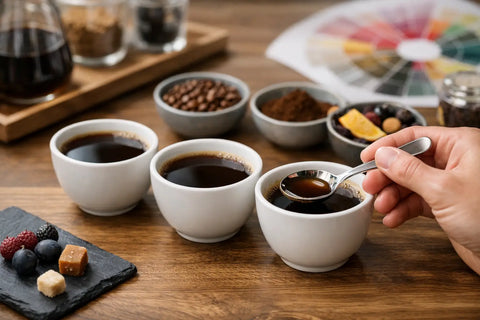
A bag that promises blueberry, cocoa, or jasmine can make coffee tasting notes seem like a secret language. They are much simpler than they sound. Coffee tasting notes explained in plain terms means learning to recognize the natural aromas and flavors already present in the bean, then noticing how roasting and brewing bring them forward in your cup.
No one is adding blueberries to a washed Ethiopian coffee or dark chocolate to a Colombian roast. Those familiar references give your senses a useful starting point. Think of them as directions, not a test with right or wrong answers. If a coffee described as peach reminds you more of apricot, nectar, or a ripe stone fruit, you are still picking up the same family of flavors.
What Coffee Tasting Notes Actually Describe
Tasting notes are concise descriptions of a coffee's sensory character. They may point to aroma, flavor, mouthfeel, or the lingering impression after a sip. A specialty coffee can suggest citrus, caramel, roasted nuts, baking spice, florals, tropical fruit, or tea-like delicacy because coffee contains a remarkable range of aromatic compounds.
Where the coffee was grown matters. High-elevation coffees often ripen more slowly, developing density and complexity. Soil, climate, variety, and processing method all shape what is possible in the cup. A bright Peruvian coffee may lean toward citrus and brown sugar, while a full-bodied Sumatran may bring earthy spice, dark chocolate, and a syrupier texture. Neither profile is better. They simply offer different journeys.
Roasting then interprets that potential. A lighter roast can preserve more floral, fruit-forward, and sparkling qualities. A medium roast may bring balance between origin character and caramelized sweetness. A darker roast often emphasizes cocoa, toasted nuts, and deeper roast notes. Great roasting is not about making every coffee taste alike. It is about presenting the coffee at a point where its best qualities feel clear and satisfying.
At Artisan Java & Tea, that attention begins with specialty-grade coffee, generally evaluated at 80 points or higher under Specialty Coffee Association standards. Careful picking, defect control, and small-batch roasting give those origin-specific qualities a better chance to reach your kitchen intact.
Coffee Tasting Notes Explained Through Your Senses
You do not need a trained palate or a silver spoon to taste coffee with more intention. Start with a fresh brew, a moment without distractions, and the willingness to be pleasantly surprised.
Aroma comes first
Smell the dry grounds before brewing, then breathe in the steam rising from the cup. Aroma does much of the flavor work before coffee even reaches your tongue. You may notice fragrance that feels sweet, nutty, fruity, floral, or spice-like.
Try to separate the first impression from the specific memory it recalls. Instead of pressuring yourself to identify “orange blossom,” begin with “floral and sweet.” With time, your reference library expands through everyday foods: a lemon peel, toasted almond, blackberry jam, or a square of milk chocolate.
Acidity is brightness, not bitterness
In coffee, acidity describes liveliness. It can resemble the clean snap of a green apple, the juicy pop of orange, or the softer tang of stone fruit. A coffee with good acidity feels awake and structured, rather than sour.
The distinction matters. Pleasant acidity is integrated with sweetness and has a clear, refreshing quality. Sourness is often sharp and underdeveloped, and it can come from under-extraction, water that is too cool, or a grind that is too coarse. If your coffee tastes sour but the label suggests lemon or berry, do not assume the tasting note is wrong. Adjust your brewing before judging the bean.
Sweetness makes flavors feel complete
Coffee sweetness is not the same as added sugar. It can remind you of honey, caramel, molasses, ripe fruit, or cane sugar. It softens acidity, rounds the cup, and often becomes easier to notice as coffee cools slightly.
A naturally processed coffee may show jammy berry sweetness because the fruit dries around the seed during processing. A washed coffee can taste cleaner and more transparent, with sweetness that feels like sugarcane or delicate fruit. Processing is not a quality ranking. It is one of the choices that helps create a coffee's personality.
Body is texture and weight
Body is the sensation of coffee resting on your palate. Imagine the difference between skim milk, whole milk, and cream. Coffee can be light and tea-like, round and silky, or heavy and syrupy.
Body is influenced by origin and processing, but your brewer matters too. A paper-filtered pour-over often highlights clarity and lighter texture. A French press lets more oils into the cup, creating a fuller feel. Espresso is concentrated, so it can deliver an especially dense, velvety body. Choose the method that suits the experience you want, rather than expecting every coffee to taste its best the same way.
Finish is what stays with you
After swallowing, pause. The finish, sometimes called aftertaste, is the flavor and texture that remain. It might be short and crisp, sweet and cocoa-like, or long with a gentle spice note. A clean finish is often a sign of careful processing and sound roasting, although “clean” does not mean “plain.” Some of the most memorable coffees leave a vivid fruit or floral echo.
Read a Coffee Label Without Overthinking It
Most specialty coffee labels offer a few tasting notes, an origin, and a roast level. Use each detail as a clue. The notes tell you what the roaster noticed most clearly. Origin can hint at regional tendencies, but it is not a guarantee. Roast level suggests the balance you might expect between inherent origin flavors and developed roast character.
For example, a coffee labeled “cocoa, roasted almond, red apple” may be sweet and approachable, with mild fruit brightness rather than a cup that tastes like dessert. “Jasmine, bergamot, and honey” signals a more aromatic, delicate profile, often rewarding a careful pour-over. “Dark chocolate, cedar, and baking spice” points toward depth and savory warmth, perhaps especially enjoyable as a French press or with a splash of milk.
Tasting notes are also not ingredients, sweetness levels, or flavorings. If you prefer coffee that tastes unmistakably like coffee, you may find that these descriptions help rather than hinder. They explain why one cup feels nutty and comforting while another feels lively and fruit-forward.
How Brewing Changes What You Taste
The same coffee can taste surprisingly different from one morning to the next. Freshness, grind size, water temperature, ratio, and brewing method all influence extraction. That is not a reason to make brewing stressful. It is an invitation to make one small adjustment when a cup feels off.
If a coffee tastes thin or sour, try a slightly finer grind, a little more brewing time, or hotter water. If it tastes bitter, dry, or harsh, try a slightly coarser grind, less contact time, or a lower water temperature. For most manual brewing, water just off the boil is a dependable place to begin, especially for lighter roasts.
Use freshly ground coffee when possible. Whole beans hold their aromatic character longer than pre-ground coffee, and a consistent grinder makes it easier to repeat the cup you enjoyed. Keep the coffee-to-water ratio steady while you adjust only one variable at a time. That way, you learn what created the change.
Milk, cream, and sweetener also change perception. They can soften acidity and emphasize chocolatey or caramel-like notes, which makes a medium or darker roast especially inviting. A black cup can reveal more nuance, but there is no prize for drinking coffee in a way you do not enjoy. The best method is the one that makes you want to return for another thoughtful sip.
Build Your Palate One Cup at a Time
Start with broad categories: fruit, chocolate, nuts, florals, spice, and roast. Once you can place a coffee in one or two categories, become more specific only if it feels natural. Compare two coffees side by side when you can. A balanced Colombian and an earthy Sumatran, for instance, make their differences much easier to notice together than alone.
Let the coffee cool for several minutes, too. Extremely hot coffee mutes details, while a warm cup often reveals more sweetness and fruit. Take a small sip, gently move it across your palate, and ask a few relaxed questions: Does it feel bright or mellow? Light or heavy? Is the finish sweet, dry, or spicy? The answer can be a simple pleasure, not a performance.
The next time a label says plum, cacao nib, or toasted hazelnut, treat it as an invitation to look closer. Your own words may be different, but the ritual is the same: brew with care, taste with curiosity, and let each cup offer a small trip to the place and people behind the bean.

Comments (0)
There are no comments for this article. Be the first one to leave a message!