A fine loose-leaf tea can carry the scent of a spring garden, toasted grain, citrus peel, or warm spice. But leave that same tea beside the stove in a clear jar, and those details can fade surprisingly quickly. Learning how to store loose tea is one of the simplest ways to protect the character that made you choose it in the first place.
The goal is not to create a museum-quality archive for your tea. It is to limit the everyday forces that dull flavor: air, light, heat, moisture, and strong odors. With the right container and a little attention to where it lives, your tea cabinet can preserve more of the freshness, aroma, and pleasure in every steeped cup.
What Makes Loose Tea Lose Its Freshness?
Tea is dry, but it is far from inert. Its delicate aromatic compounds gradually evaporate after opening, especially when leaves are repeatedly exposed to air. That is why a bright floral green tea or a fragrant Earl Grey may seem less expressive near the end of a poorly stored bag.
Light is another quiet flavor thief. Direct sunlight and even bright kitchen lighting can speed up the deterioration of tea leaves, affecting both aroma and appearance. Heat amplifies the problem, while moisture can cause leaves to clump, lose their crisp texture, or, in more serious cases, develop mold.
Loose tea also readily absorbs surrounding smells. Store an unsealed pouch near coffee, spices, onions, scented candles, or cleaning products, and you may taste those neighbors in your next cup. Tea leaves are wonderfully absorbent in a teapot. In a pantry, that quality requires a little protection.
How to Store Loose Tea at Home
For most teas, the best setup is wonderfully straightforward: keep the leaves in an airtight, opaque container in a cool, dry, dark cupboard. A cabinet away from the oven, dishwasher, sink, and sunny countertop is usually a better choice than the most convenient spot beside your kettle.
The original packaging can work well if it is resealable and made from a thick, light-blocking material. Once opened, press out excess air before resealing it. If the pouch does not close tightly, place it inside a tin, an airtight canister, or a food-safe container with a dependable lid.
A tea tin is popular for good reason. It blocks light, is easy to open during daily brewing, and can help keep a collection organized. Choose one with a snug lid, and make sure it is completely clean, dry, and free of fragrance before filling it. A beautiful container that does not seal well is better suited to short-term display than long-term storage.
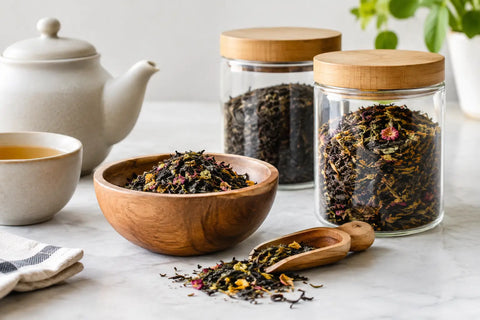
Glass jars can be useful, particularly if you enjoy seeing your leaves, but they come with a condition: keep them inside a dark cabinet. Clear glass on an open shelf turns tea into decor at the expense of freshness. If glass is your preference, an amber or dark-colored jar offers more protection, though it should still be kept out of direct light.
Keep Moisture Out at All Costs
Never scoop tea with a wet spoon or damp fingers. Even a small amount of introduced moisture can compromise a larger amount of tea over time. Let the steam from your kettle settle before opening the container, rather than holding the tin directly over rising vapor.
This matters especially in humid climates and busy kitchens. If your tea storage area feels warm or damp, move the collection to a drier interior cabinet. Do not store loose tea in the refrigerator or freezer for everyday use. Frequent temperature changes can create condensation when the container is opened, bringing moisture exactly where it does not belong.
Give Tea Its Own Space
A dedicated tea drawer, cabinet shelf, or storage box is ideal. It does not need to be elaborate. The point is to keep leaves away from aromatic foods and household products while making it easy to reach for a daily cup.
If you have several teas, avoid combining different varieties in one container. Even when the leaves look similar, their aromas can mingle. A smoky black tea can overwhelm a gentle white tea, while mint and chai can leave their mark on nearly anything nearby.
The Best Containers for Different Tea Habits
The right storage method depends partly on how quickly you drink tea. If you finish a pouch within a few weeks, a well-sealed original package tucked into a dark cupboard may be all you need. For a larger quantity or a tea you plan to enjoy over several months, an airtight tin or canister gives you more consistent protection.
For daily drinkers, consider dividing a large bag between two containers. Keep a small working tin for the week and leave the rest sealed until you need a refill. This reduces repeated exposure to air and helps the bulk of your supply retain its aroma longer.
For tea lovers building a varied collection, label each container with the tea name and the date it was opened. That small detail makes it easier to enjoy more delicate teas first and prevents a favorite from quietly disappearing to the back of the cabinet.
Avoid containers made from porous wood, untreated ceramic, or thin plastic unless they have a truly airtight inner seal. These materials can retain odors or allow more air exchange than you might expect. Metal tins, food-safe airtight canisters, and high-quality resealable pouches are usually the most practical choices.
Does Storage Differ by Tea Type?
The same core rules apply to black, green, white, oolong, herbal, and flavored teas, but their ideal drinking windows can differ. Delicate green and white teas often show their brightest character sooner after opening. Their fresh vegetal, floral, or sweet notes are especially worth protecting from heat and air.
Black teas and many roasted oolongs are generally more forgiving. Their deeper oxidized or toasted profiles may remain enjoyable for longer when stored properly, though they still lose fragrance over time. Herbal blends can hold up well, but citrus peel, flowers, and mint often become less vivid first.
Some aged teas are intentionally matured under carefully controlled conditions. That is a specialized practice, not the same as ordinary pantry storage. Unless a tea producer provides specific aging instructions, treat your loose-leaf tea as a fresh food product: buy an amount you can enjoy, store it well, and savor it while its personality is clear.
How Long Does Loose Tea Stay Fresh?
Loose tea rarely becomes unsafe simply because it has passed a date on the package, provided it has stayed dry and free of spoilage. The real question is quality. Over time, leaves lose the aromatic top notes that create a memorable cup.
As a general guideline, aim to enjoy most opened loose teas within six to twelve months. Delicate green, white, and highly floral teas are best enjoyed toward the earlier end of that range. Well-stored black teas, oolongs, and many herbal blends may still taste good beyond a year, but the cup may be quieter and less layered.
Use your senses. Fresh leaves should have a distinct, clean aroma when you open the container. If the tea smells flat, musty, sour, or oddly perfumed by its surroundings, it is time to let it go. Visible moisture, clumping unrelated to the blend, or any sign of mold means the tea should be discarded.
Buy for Freshness, Not Just for the Pantry
It can be tempting to stock up on a favorite tea, especially when a flavor becomes part of your morning ritual. Yet smaller purchases often deliver a better experience, particularly for nuanced single-origin teas and fragrant blends. A fresh bag opened at the right moment is more likely to offer the full aromatic journey the maker intended.
This does not mean you need to ration your collection. It means giving each tea a fair chance to shine. Choose a few varieties for the season, store them with care, and return to them often enough to notice how they change from the first steep to the last.
A well-kept tea tin does more than protect leaves. When you lift the lid and are greeted by a clear, inviting aroma, it sets the tone for a slower, more flavorful moment - one worth making room for in the day.
Comments (0)
There are no comments for this article. Be the first one to leave a message!