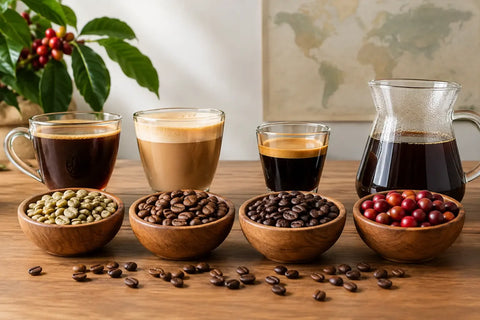
A coffee can taste like ripe berry jam, brown sugar, roasted almond, or even a hint of cedar - all before a flavored syrup enters the picture. This coffee origin flavor guide helps make sense of those differences, so choosing a bag becomes less of a guessing game and more like planning a small journey with your morning cup.
Coffee origin refers to where coffee was grown, from a broad country to a particular region, farm, cooperative, or even micro-lot. Place shapes a coffee's potential flavor through elevation, climate, soil, coffee variety, harvesting, and processing. It is a useful starting point, not a promise written in stone. Roast level and brew method still have plenty to say.
A Coffee Origin Flavor Guide Starts With Place
Coffee is a fruit. Its seeds, which become the beans we roast, develop in landscapes with distinct temperatures, rainfall patterns, and growing elevations. Higher-elevation farms often mature coffee cherries more slowly, which can support layered acidity and sweetness. Warmer, lower-growing areas may produce a rounder, heavier cup. Neither is automatically better. The right choice depends on whether you are looking for a sparkling pour-over, a cozy drip coffee, or a fuller-bodied espresso.
Specialty-grade coffee offers a clearer window into origin because careful picking, sorting, and defect control help preserve what makes a coffee distinctive. Coffees that score 80 points or higher under Specialty Coffee Association standards have met a recognized quality benchmark. When those beans are roasted in small batches and sent fresh rather than sitting for months in a warehouse, the character of the growing region has a better chance to reach your cup.
Still, think of origin descriptors as a flavor neighborhood rather than a fixed street address. A washed Colombian and a natural-processed Colombian can taste dramatically different. One may lean toward clean red apple and caramel, while another feels more like berry compote. Both can be excellent, and both can honestly be Colombian.
The Flavors Commonly Associated With Popular Origins
Colombia: balanced sweetness and easy versatility
Colombia is often a welcoming place to begin because many coffees offer a balanced combination of gentle fruit, caramel-like sweetness, and a smooth body. Depending on the region and processing, you might find notes of citrus, red fruit, chocolate, or toasted nuts.
This balance makes Colombian coffee forgiving across brewing styles. Try it as a drip coffee when you want a familiar, crowd-pleasing cup, or use a medium roast for espresso when you prefer sweetness without losing all sense of fruit. If your usual coffee tastes flat or overly bitter, a fresh specialty Colombian can be a useful reset.
Guatemala: cocoa, spice, and structured sweetness
Guatemalan coffees are frequently admired for their poised, layered profiles. Many present cocoa, brown sugar, apple, baking spice, or a subtle citrus lift, often with a satisfying body. The cup can feel refined without becoming fragile.
For people who enjoy coffee with breakfast or want a thoughtful afternoon mug, Guatemala is a strong choice. It tends to hold up well in a French press or automatic brewer, where its sweetness and texture can feel especially comforting. Darker roasting can emphasize chocolate notes, but a roast that goes too far may hide the pleasant fruit and spice that made the bean interesting in the first place.
Honduras: sweet, approachable, and quietly complex
Honduras has become a favorite among specialty coffee drinkers for coffees that are often sweet, smooth, and approachable. Expect possibilities such as milk chocolate, honey, stone fruit, caramel, and citrus, with the exact profile changing by region and producer.
A Honduran coffee is a fine match for someone moving from familiar grocery-store blends toward single origins. It can offer distinctiveness without demanding a highly technical brewing setup. Brew it as a pour-over for more fruit clarity, or as a medium-bodied drip coffee for an easy everyday ritual.
Peru: mellow fruit and gentle elegance
Peruvian coffee often brings a softer, composed character to the table. Many lots show notes of chocolate, nut, floral honey, mild citrus, or stone fruit, paired with a clean finish. The profile can be delicate, so freshness and a measured roast matter.
Choose Peru when you want a cup that feels calm rather than loud. It is particularly pleasant for a morning pour-over, though it can also make a graceful batch brew. If you take a little milk, select a slightly more developed roast or use a stronger coffee-to-water ratio so the coffee's sweetness remains present.
Sumatra: earthy depth and a syrupy body
Sumatran coffee takes the conversation in another direction. It is often known for a fuller body and savory, earthy notes that may suggest cedar, dark chocolate, warm spice, herbs, or dried fruit. This profile is influenced not only by geography but also by regional processing traditions, including wet-hulling methods that can create a distinctive texture and character.
For drinkers who find bright, citrus-forward coffee too sharp, Sumatra can be a welcome change. It performs beautifully in a French press, cold brew, or a fuller espresso blend. Its depth also stands up well to milk. The trade-off is that its savory character is not for everyone, especially if you are seeking a crisp, tea-like cup.
Why Origin Is Only One Part of the Flavor Story
If two bags have the same origin on the label, do not expect them to taste identical. Processing is one major reason. In washed processing, fruit is removed before drying, which often highlights clean acidity and transparent flavors. Natural processing dries the cherry around the seed, often creating heavier fruit notes and more body. Honey processing leaves some fruit mucilage on the bean during drying and can land somewhere between those styles, with rounded sweetness and fruit complexity.
Roast development changes the picture, too. A light roast may highlight lemon, florals, and delicate fruit, while a medium roast can bring out caramel, chocolate, and balanced sweetness. A darker roast favors roast-driven flavors such as bittersweet cocoa and toasted nuts. Dark roasting is not wrong, but it can make coffees from very different origins taste more alike.
Brewing is the final translator. A pour-over can make acidity and subtle aromatics easier to notice. A French press emphasizes body and oilier texture. Espresso condenses sweetness, intensity, and roast character into a smaller serving. Cold brew often softens acidity and creates a smooth, mellow impression. If a coffee tastes unlike the label's notes, adjust your grind, water temperature, ratio, or extraction time before deciding the beans are not for you.
How to Choose Coffee by the Cup You Want
Rather than memorizing every coffee-growing country, begin with the experience you want. For a bright, fruit-forward cup, look for lighter-roasted coffees with citrus, berry, floral, or stone-fruit notes, often from high-elevation Latin American lots. For a classic sweet and balanced daily coffee, Colombia, Honduras, Guatemala, and Peru are all excellent places to explore.
When chocolate, nuts, and caramel sound best, choose a medium roast with descriptors such as cocoa, praline, brown sugar, or toffee. For deeper, more savory coffee with a heavier mouthfeel, explore Sumatra or a blend built for espresso and cold brew. If you are brewing for a household with different preferences, a balanced Colombian or Guatemalan coffee is usually the safest starting point.
Pay attention to the language on the bag, but do not treat tasting notes as added ingredients. “Cherry” means the coffee reminded the roaster or taster of cherry in aroma, acidity, sweetness, or finish. Your own experience may be closer to cranberry, plum, or red apple. That does not mean you are tasting it incorrectly. Flavor vocabulary is useful when it helps you notice more, not when it turns a morning cup into a test.
Build Your Own Origin Taste Map
The most enjoyable way to learn is to compare coffees under similar conditions. Choose two origins, use the same brewer and recipe, and taste them side by side after they cool slightly. Note three things: aroma, acidity, and finish. Does one feel bright or round? Is the sweetness more like fruit, honey, or chocolate? Does the flavor disappear quickly, or linger with spice or cocoa?
Keep the notes simple. “Loved this with oat milk” and “too tangy before breakfast” are just as useful as formal tasting language. Over a few bags, patterns emerge. You may learn that you enjoy the clean sweetness of a washed Honduran for weekday drip coffee but reach for a deeper Sumatran cold brew on warm Southern California afternoons.
At Artisan Java & Tea, each fresh-roasted bag can be an invitation to travel by taste, from a bright and lively first sip to a long, cocoa-rich finish. Start with the flavor you already love, then let the next origin move your cup one delicious step further.
Comments (0)
There are no comments for this article. Be the first one to leave a message!